

A chesty cough is your body clearing mucus from the lungs and airways, usually caused by a cold, flu, or chest infection. Most chesty coughs clear in 1–3 weeks. The fastest way to feel better is to thin the mucus with hydration, steam, and an expectorant cough syrup. Avoid suppressants. They trap mucus and prolong the cough. See a doctor if the cough lasts past 3 weeks or you cough up blood.
See cough syrups for productive cough · Find Hedervy at a pharmacy
A chesty cough — also called productive or wet cough — happens when your body brings up mucus from your airways. Your chest feels heavy. The cough sounds rattling, sometimes gurgling. You can usually feel something moving when you cough.
In Singapore, most chesty coughs come from common viral infections that pass through the population during cold and flu season (peaking January to March), during haze episodes when PM2.5 levels spike, and after strong air-conditioning exposure that dries the airways. Less commonly, they come from bacterial chest infections, asthma flares, or chronic conditions.
This guide explains how to tell a chesty cough apart from a dry cough, what’s causing it, what to do at home, what to buy at the pharmacy, and when to stop self-treating and see a GP.
Chesty Cough vs Dry Cough: How to Tell the Difference
This single distinction matters more than any brand choice you’ll make later. Productive coughs and dry coughs need different treatments, and using the wrong one prolongs both.
| Feature | Chesty (Productive) | Dry (Non-productive) |
|---|---|---|
| Mucus | Yes — phlegm comes up | No mucus |
| Sound | Rattling, gurgling | Tickly, hacking |
| Chest feel | Heavy, congested | Throat sore or irritated |
| Worse when | Lying down, mornings | At night, dry air |
| Best treatment | Expectorant (thins mucus) | Suppressant or demulcent |
If you take a suppressant when you have a chesty cough, you quiet the cough reflex but trap the mucus your body is trying to clear. The illness drags on for an extra week. If you take an expectorant for a dry cough, you encourage coughing without anything to bring up.
When in doubt: cough hard once. If something rattles or you bring up phlegm, it’s chesty. If your throat just feels irritated and nothing comes up, it’s dry.
What Causes a Chesty Cough
Most chesty coughs in Singapore are viral and pass on their own:
- Common colds. Most frequent cause; usually clears in 7–14 days.
- Flu (influenza). Heavier symptoms, fever, body aches; can leave a residual cough up to 3 weeks.
- Acute bronchitis. Viral inflammation of the bronchial tubes; persistent cough up to 3 weeks.
- Post-nasal drip. Mucus draining from sinuses into the throat, especially with allergies or sinusitis.
Less common but worth knowing:
- Bacterial chest infections (including pneumonia). Usually present with high fever, very thick green or yellow mucus, and worsening symptoms instead of improving.
- Asthma flares. Chesty cough plus wheezing, chest tightness, breathlessness.
- Smoking and vaping. Chronic chesty cough, especially mornings.
- GERD (acid reflux). Silent reflux can cause chronic chesty-style cough with no other obvious cause.
- Singapore-specific triggers. Haze (PM2.5), strong air-conditioning dryness, mould in older housing spaces.
How Long Does a Chesty Cough Last?
A common cold-related chesty cough usually peaks in days 3–5 and clears within 7–14 days. Flu-related chesty cough can stretch to 2 weeks of active symptoms with a residual cough another 1–2 weeks beyond that. Acute bronchitis tends to leave a lingering cough up to 3 weeks even after the infection itself has passed.
If you’re past 3 weeks and still coughing — or if symptoms are worsening rather than improving — it’s GP time. Don’t keep cycling through over-the-counter products at that point.
Signs Your Chesty Cough Is Getting Better
Most articles cover what to do when a cough starts. Fewer cover what improvement actually looks like. Here are the signs:
- Mucus is thinning and becoming clear or white (rather than yellow or green).
- Coughing happens less frequently.
- Breathing feels easier; less chest tightness.
- Energy is returning.
- Sleep is becoming less disturbed by night coughs.
What it doesn’t look like: cough disappearing overnight. A productive cough genuinely getting better still produces some phlegm during the recovery period, just less of it.
If you don’t see any of these signs after about a week of self-treatment, or if mucus stays yellow/green or comes back with fever, escalate to a GP.
How to Get Relief from a Chesty Cough
The first three of these are free and start working within hours.
- Hydrate constantly with warm fluids. Warm water, ginger tea, broth-based soups. Warm liquids thin mucus from the inside out and relax the chest. Avoid ice-cold drinks while you’re congested.
- Steam inhalation, twice a day. Hot showers work. So does a bowl of just-boiled water with a towel over your head, breathing slowly through the nose for 5–10 minutes.
- Pick the right expectorant cough syrup. Four categories are commonly available in Singapore:
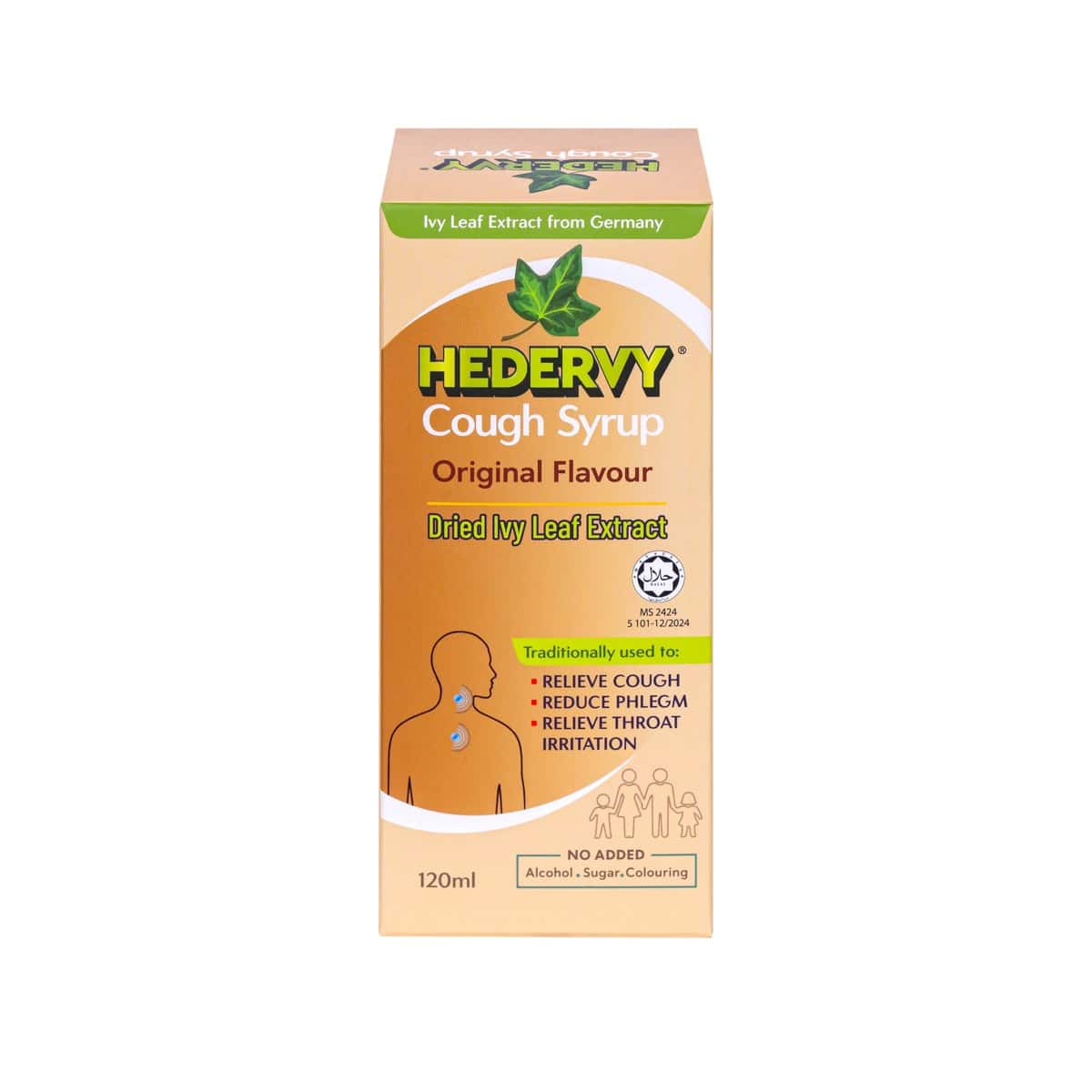
- Single-ingredient ivy leaf extract (clinical-evidence-backed). Hedera helix has an EMA herbal monograph and documented expectorant activity in clinical trials, including paediatric productive-cough studies. Found in Hedervy Original / Apple Flavour Cough Syrup (ivy leaf extract) and Hedervy Cold & Cough Syrup (ivy leaf + Elderberry extracts). Plant-based, available over-the-counter in Singapore, suitable for adults and children aged 2 years and above.
- Multi-ingredient herbal blends. Wider sensory and symptom coverage; harder to attribute action to any single ingredient.
- Synthetic expectorants. Guaifenesin.
- Synthetic mucolytics. Bromhexine, N-acetylcysteine.
- Honey and warm water. A teaspoon of honey in warm water before bed eases throat irritation. Safe for adults and children over 1. Not for babies under 1.
- Sleep with your head elevated. An extra pillow stops mucus pooling in the throat overnight. This is the simplest fix for the morning chesty cough.
- The huff technique. Instead of forcing a hard cough, exhale strongly with your mouth open as if fogging a mirror. Three “ha” exhales clear mucus more effectively than one violent cough that just irritates the throat.
Avoid these: suppressants for productive coughs, cigarettes and vapes, dry air-conditioning without humidification.
Chesty Cough Medicine in Singapore
Most chesty cough treatments are over the counter. The Health Sciences Authority groups them into three classes:
- GSL (General Sale List). Sold at any retail outlet. Includes most natural ivy-leaf cough syrups, such as Hedervy.
- Pharmacy-Only (P). Sold under pharmacist supervision. Includes dextromethorphan-based cough suppressants — these are for dry cough, not chesty cough.
- Prescription-Only (POM). Stronger formulations and antibiotics if a bacterial infection is confirmed.
For children aged 2 years and above with productive coughs, ivy-leaf syrups are the most common Singapore choice — Hedervy is family-friendly. For children under 2 years, see a pharmacist or GP first.
Active Ingredients in Chesty Cough Syrups (Singapore, 2026)
Most cough syrup labels in Singapore list one or more of the following active ingredients. Knowing what each does makes label-reading faster.
| Ingredient | Type | Best For | OTC in SG? |
|---|---|---|---|
| Ivy leaf extract (Hedera helix) | Natural expectorant and mucolytic | Wet/chesty coughs, mucus/phlegm, throat irritation | Yes |
| Guaifenesin | Synthetic expectorant | Mucus/phlegm | Yes |
| Bromhexine | Synthetic mucolytic | Mucus/phlegm | Yes |
| N-acetylcysteine (NAC) | Synthetic mucolytic | Mucus/phlegm | Yes |
| Dextromethorphan | Suppressant | Dry cough | No |
| Honey + herbal blend | Multi-ingredient herbal | Mild throat irritation + cough | Yes |
| Codeine | Suppressant (opioid) | Severe coughs only | Tightly restricted. Pharmacy supply with HSA quantity limits; contraindicated under age 12 |
Reading the table: for a chesty (productive) cough, the expectorants and mucolytics are the rows that matter. Ivy leaf extract is the one natural option with clinical-research backing — it’s the active in Hedervy‘s range.
When to See a Doctor for a Chesty Cough
The threshold for “see a GP” is lower than many people assume. Don’t wait if any of these apply:
- Cough has lasted more than 3 weeks.
- You’re coughing up blood (any amount).
- High fever (above 39°C / 102°F) lasting more than 3 days.
- Shortness of breath, chest pain, wheezing.
- Children under 2 with persistent cough.
- You have asthma, COPD, heart disease, or diabetes and the cough isn’t improving.
Singapore options: polyclinic, private GP, telehealth, A&E for severe symptoms. Confirm current rates before going.
Frequently Asked Questions
How do I get rid of a chesty cough?
The fastest approach combines four things: warm fluids hourly, steam inhalation twice daily, an expectorant cough syrup matched to your cough type, and rest. Most chesty coughs improve within 1–2 weeks. Skip cough suppressants for a chesty cough; they silence the cough reflex, which is the wrong move when your body is trying to bring mucus up.
How do I know if my cough is chesty?
A chesty cough produces phlegm (mucus) when you cough, and your chest feels heavy or rattling. The sound test: if coughing produces a wet, gurgling sound and brings something up, it’s chesty.
How do I know if a chesty cough is viral or bacterial?
Viral chesty coughs usually come with cold or flu symptoms — runny nose, sore throat, mild fever — and resolve in 1–2 weeks. Bacterial chest infections often have higher fever, thicker green or yellow mucus, and worsen instead of improving. If you’re unsure, see a GP. Antibiotics only help bacterial cases.
How long does a chesty cough last?
Most chesty coughs from a cold or flu clear within 7–14 days, with residual cough lingering up to 3 weeks. Acute bronchitis can take the full 3 weeks. See a doctor if the cough persists beyond 3 weeks or symptoms worsen instead of improving.
What triggers a chesty cough?
Most chesty coughs are triggered by viral infections (cold, flu, bronchitis). Other triggers include smoking, vaping, asthma, allergies, GERD (acid reflux), and environmental irritants. In Singapore: haze episodes (PM2.5), strong air-conditioning dryness, and mould in older buildings.
What is the best cough syrup for a chesty cough?
For productive (chesty) coughs, choose an expectorant. Ivy leaf extract syrups (the Hedervy range) are clinical-evidence-backed natural options available over-the-counter. Avoid suppressants for chesty coughs.
Can children take chesty cough medicine?
Most ivy leaf extract expectorant syrups are suitable for children aged 2 years and above — the Hedervy range are family-friendly options widely used by Singapore parents. For under-2s, consult a pharmacist or GP before any cough product. Avoid codeine and pholcodine for children at any age.
Why is my chesty cough worse in the morning?
Mucus pools in the throat overnight when you lie flat. The cough that follows when you wake is your body clearing what built up during sleep. Sleeping with your head elevated, running a humidifier, and a hydration push first thing usually fixes the morning-cough pattern.
Where Hedervy Fits
For chesty coughs specifically, the Hedervy range are ivy-leaf extract options on Singapore shelves. Halal-certified (MS 2424), clinical-evidence-backed, and free from added alcohol, sugar, or colouring; suitable for adults and children aged 2 and above. Stocked at major Singapore pharmacies.
Last updated 2026-05-27. This article is for general information only and is not a substitute for medical advice. For severe or persistent symptoms, see a doctor.