

The fastest way to get rid of phlegm is to thin it so your body can clear it naturally. Drink warm fluids, inhale steam, gargle salt water, and – for stubborn or chesty mucus – use an expectorant like ivy leaf extract. Most phlegm clears within 7–10 days. See a doctor if it lasts more than 3 weeks, contains blood, or comes with high fever.
For chesty cough with phlegm. See our cough syrup guide · Find Hedervy at a pharmacy
How to get rid of phlegm depends on whether it’s in your throat, your chest, or both, and how long it has lasted. Most phlegm is your immune system clearing an infection or irritant. The goal isn’t to suppress it. It’s to thin it and help your body finish the job.
In Singapore, phlegm complaints spike during haze episodes, around January–March cold/flu season, and during transitions from outdoor heat to strong office air-conditioning. The remedies below are practical, evidence-backed, and based on what works in tropical, AC-heavy living conditions, not on UK or US guidance that doesn’t account for our climate.
What Causes Phlegm and When It’s a Problem
Phlegm is mucus produced by the lower respiratory tract (your chest and lungs), as opposed to nasal mucus from the sinuses. A small amount of phlegm is normal. Excess phlegm usually means your body is responding to an infection (cold, flu, bronchitis), an allergen (dust, dander, haze), or chronic irritation (smoking, vaping, GERD).
Phlegm colour gives you useful information:
- Clear or white – normal, or mild congestion
- Yellow or green – possible infection, especially if it comes with fever
- Brown, usually from smoking, vaping, or pollution exposure
- Red or pink. See a doctor immediately; could indicate bleeding in the airways
If you notice green or yellow phlegm with a high fever lasting more than 3 days, or any blood at all, this stops being a “remedy at home” situation. Get checked.
9 Ways to Get Rid of Phlegm
The remedies below are the same ones consistently recommended by Singapore’s HealthHub, the NHS, Cleveland Clinic, and the NIH. Most are free and start working within hours.
1. Hydrate constantly, especially with warm fluids
Drinking water, particularly warm water, thins mucus from the inside out. Warm liquids work faster than cold ones because they encourage the throat and chest to relax, making it easier for the body to clear mucus naturally.
Aim for 8–10 cups a day if you’re well, more if you’re sick. Warm options: ginger tea, broth-based soups, plain hot water with lemon, or weak honey water. Avoid ice-cold drinks while congested. They tighten the airways and slow mucus clearance.
2. Inhale steam twice a day
A hot shower works. So does a bowl of just-boiled water with a towel over your head. Inhale slowly through the nose for 5–10 minutes, twice daily. This moisturises the airways and loosens stuck mucus.
If you tolerate it, add a few drops of eucalyptus or peppermint oil. The cooling sensation signals your airways to relax. People with asthma should test small amounts first; strong menthol can sometimes trigger spasm.
3. Gargle warm salt water
Mix half a teaspoon of salt in a glass of warm water. Gargle for 30 seconds, two to three times a day. This reduces phlegm in the throat, has mild antibacterial action, and soothes irritation. It’s one of the simplest and most consistently recommended remedies in Singapore patient guidance from polyclinics and HealthHub.
4. Run a humidifier when you sleep
Singapore homes with strong air-conditioning often dry out at night, which thickens mucus and makes phlegm worse by morning. A cool-mist humidifier in the bedroom keeps relative humidity around 40–50% and prevents the overnight drying-out effect.
Don’t overdo it. Above 60% humidity for extended periods can encourage mould growth, which is its own respiratory problem.
5. Take an expectorant cough syrup
Expectorants thin mucus so your normal cough can clear it. Three categories are commonly available in Singapore:
- Single-ingredient ivy leaf extract (Hedera helix), clinical-evidence-backed. Hedera helix has an EMA herbal monograph and documented expectorant activity in clinical trials, including paediatric productive-cough studies. Found in Hedervy. Plant-based, available over-the-counter in Singapore (classified as Traditional Medicine), suitable for adults and children aged 2 years and above.
- Multi-ingredient herbal blends – honey, mint, and herbs. Wider sensory coverage; harder to attribute action to any single ingredient.
- Synthetic expectorants – guaifenesin. Available over-the-counter in Singapore.
Avoid suppressants for productive coughs. Suppressants quiet the cough reflex but trap the mucus you’re trying to clear.
6. Use the “huff” technique instead of forced coughing
A forced “ha, ha, ha” exhale – physiotherapists call it huff coughing – moves mucus out of the chest more effectively than a hard, irritating cough. Take a medium breath, then exhale forcefully with the throat open, as if fogging up a mirror. Repeat 2–3 times.
This is the standard technique recommended for COPD patients by many respiratory rehab programs. It works just as well for ordinary phlegm clearance.
7. Sleep with your head elevated
Lying flat lets mucus pool in the throat overnight. Add a second pillow or sleep on a wedge. This is the simplest fix for the “morning phlegm” problem most Singaporeans experience during cold and flu season.
8. Try eucalyptus or menthol vapour
Vapour rubs, lozenges, and menthol-containing topicals all work on the same principle as steam inhalation: cooling receptors in the airways trigger a sense of clearer breathing and relax the chest. Useful as an add-on to an expectorant cough syrup when phlegm comes with chest tightness or congestion.
9. Cut back on smoking, vaping, and (sometimes) dairy
Tobacco and vape smoke thicken mucus production and irritate airways. If you smoke, this is the biggest single change you can make.
Dairy is more contested. Research shows dairy doesn’t actually cause more mucus, but it can thicken existing mucus in some people, making it feel worse. If you notice phlegm worsens after milk or cheese, try a 3-day cutback as a low-risk test. Don’t generalise. Many people are unaffected.
What to Avoid While Trying to Clear Phlegm
A few things make phlegm worse, even when you’re trying to do everything else right:
- Suppressant cough syrups for wet coughs. They trap mucus
- Excess coffee or alcohol. Both dehydrate, thickening mucus
- Smoking and vaping – direct cause of thicker phlegm
- Strong air-conditioning without humidification – dries the airways
- Antibiotics for viral coughs. They don’t help, and overuse fuels resistance
How Long Phlegm Should Last
Most phlegm clears within 7–10 days for a common cold. Flu can stretch this to 2 weeks. Acute bronchitis can leave a residual cough with mild phlegm for up to 3 weeks. Post-viral phlegm sometimes lingers up to 8 weeks but resolves on its own.
If your phlegm is persisting beyond 3 weeks, getting worse instead of better, or coming with new symptoms, see a GP.
When to See a Doctor in Singapore
Specific signs that mean you should not wait:
- Phlegm lasting more than 3 weeks
- Blood in phlegm (any amount)
- Green or yellow phlegm + high fever (above 39°C)
- Chest pain or shortness of breath
- Wheezing (especially if you have asthma)
- A child under 2 with persistent phlegm
- An underlying condition (asthma, COPD, heart disease) and no improvement after a week
In Singapore, polyclinic visits are typically around $14–18 for citizens with subsidies. Private GPs run around $40–80. Telehealth options start near $25 if you’d rather avoid the clinic. Confirm current rates before going.
Quick Reference: Phlegm Type → Best Remedy
| Symptom | Likely Cause | Best Remedies | Hedervy Fit |
|---|---|---|---|
| Phlegm in throat after a cold | Post-viral mucus | Hydration, gargle, ivy leaf expectorant | Original / Apple Flavour Cough Syrup (ivy leaf extract) |
| Chesty cough with thick phlegm | Productive cough | Steam, expectorant, huff coughing | Original / Apple Flavour Cough Syrup (ivy leaf extract) |
| Stuffy nose + chest phlegm | Cold/flu combo | Steam + ivy leaf expectorant + hydration | Elderberry + ivy leaf extracts (Cold & Cough Syrup) |
| Morning phlegm only | Postnasal drip | Head elevation, humidifier, hydration | Elderberry + ivy leaf extracts (Cold & Cough Syrup) |
| Persistent dry cough, no phlegm | Throat irritation or asthma | See GP if asthma is suspected. For sore throat alongside a cold, Hedervy Cold & Cough is traditionally used to relieve runny nose, nasal congestion, cough, and sore throat | Elderberry + ivy leaf extracts (Cold & Cough Syrup) |
Frequently Asked Questions
What is the fastest way to get rid of phlegm?
The fastest method is a combination: drink warm fluids hourly, do steam inhalation twice a day, and use an expectorant if mucus is stubborn. Most cases clear within 7–10 days. There’s no single “instant” remedy. Phlegm clearance is your body’s process, and the goal is to support it, not bypass it.
What drink kills phlegm?
No drink “kills” phlegm, but several thin it so your body clears it faster: warm water with honey and ginger, broth-based soups, warm herbal teas, and weak black tea. Avoid ice-cold drinks while congested. They slow mucus clearance.
How do I clear phlegm stuck in my throat?
Try the huff technique: exhale forcefully with an open mouth saying “ha, ha, ha” instead of coughing hard. Combined with warm fluids and salt-water gargles, this clears most throat phlegm without irritating it further. Avoid throat-clearing. It irritates the vocal cords and often makes things worse.
What foods aid recovery?
Foods rich in vitamin C, garlic and ginger (mild antimicrobial action), and warm broth-based soups can help thin mucus. Reduce heavy dairy and very sugary foods if you find they thicken your phlegm. Research is mixed on dairy as a universal trigger.
Why won’t my phlegm go away?
Phlegm lasting more than 3 weeks may signal post-viral inflammation, allergies, GERD, or a bacterial infection. See a GP. At a Singapore polyclinic, this typically runs around $14–18 with subsidies. Don’t keep cycling through over-the-counter products if 3 weeks have passed.
Is it better to spit out phlegm or swallow it?
Both are safe. Swallowing sends mucus to the stomach, where acid neutralises it. Spitting it out is normal during active illness. Either way, your body handles it. The only thing to avoid is forcefully holding it in. That doesn’t help anything.
Can children take expectorants for phlegm?
Children aged 2 years and above can take ivy leaf-based syrups (Hedervy). Both are available over-the-counter in Singapore (classified as Traditional Medicines) and commonly used by Singapore parents for productive coughs. For age 1+, honey-based remedies are the safer route. For under 1, no honey, and most OTC products aren’t suitable. Speak to a pharmacist or GP first.
Does Hedervy help with phlegm specifically?
Hedervy is built around natural ivy leaf extract (Hedera helix) from Germany, which the European Medicines Agency recognises as a traditional expectorant for productive cough. Clinical trials, including paediatric studies, support ivy leaf’s expectorant activity. Hedervy is suited specifically for productive (chesty) coughs with phlegm, and for throat irritation.
A note on Hedervy
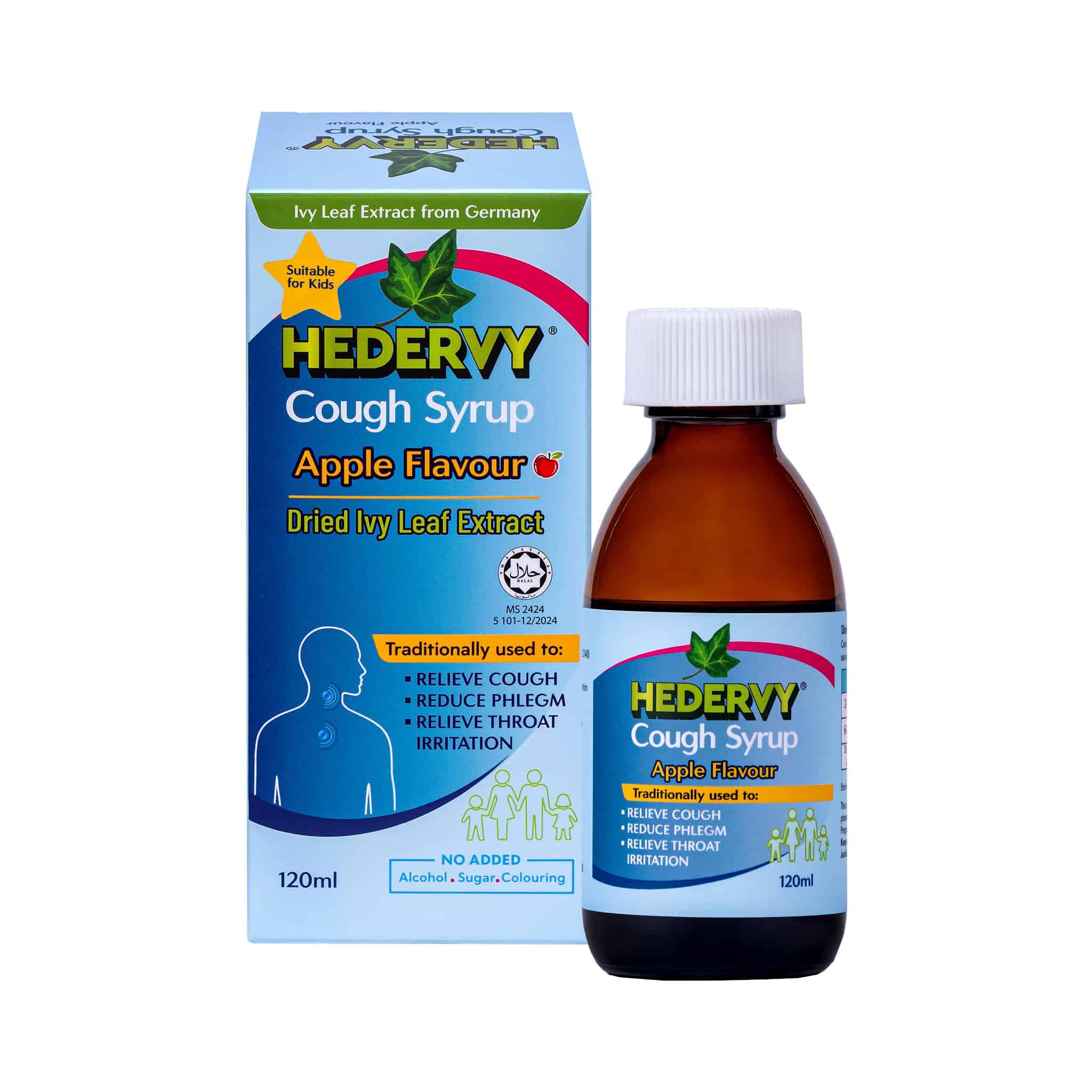
If your phlegm comes with a chesty cough, Hedervy’s ivy leaf syrup is one of the natural expectorants you’ll find in the retail pharmacy outlets. It is Halal-certified (MS 2424) and contains no added alcohol, sugar, or artificial colouring. The Cold & Cough syrup variant adds Black Elderberry fruit extract from Germany and is traditionally used to relieve runny nose, nasal congestion, cough, sore throat, and reduce phlegm. Browse the full range and stockist list on the Hedervy website
Browse the full range and stockist list on the Hedervy website.
Last updated 2026-05-04. This article is for general information only and is not a substitute for medical advice. For severe or persistent symptoms, see a doctor.