

Quick answer: Drowsiness from cough syrup almost always comes from one ingredient class: sedating antihistamines, such as chlorphenamine, diphenhydramine, promethazine, and brompheniramine.1,2,3,4 Codeine can also cause drowsiness.5 Expectorants like ivy leaf extract and guaifenesin work through a different mechanism and are not associated with sedation.6 To find a non-drowsy option, check the active ingredients on the label rather than the marketing on the front of the box.
See the full cough syrup guide · Ivy leaf: clinically shown to relieve cough · Coughing at night
If you’ve ever taken a cough syrup before a school run, a work meeting, or a long drive and ended up fighting to stay alert, you already know “non-drowsy” matters more than the flavour on the label. The confusing part is that most cough syrup boxes don’t say “drowsy” anywhere. You have to know what to look for in the ingredients list. This guide explains exactly which ingredients cause the drowsiness, why, and how to read a label so you’re not guessing at the pharmacy shelf.
Which Ingredients Cause Drowsiness (and Which Don’t)
Cough syrups combine ingredients from a handful of categories, and only some of them affect alertness.
| Ingredient class | Examples | Causes drowsiness? | Why |
|---|---|---|---|
| Sedating (first-generation) antihistamines | Chlorphenamine, diphenhydramine, promethazine, brompheniramine | Yes | Cross into the brain and dampen alertness1,2,3,4 |
| Opioid cough suppressant | Codeine | Yes, for some people | Acts on the central nervous system; drowsiness is a listed effect5 |
| Expectorants | Ivy leaf extract (Hedera helix), guaifenesin | No | Work on mucus in the airway, not on the brain6,7 |
| Non-sedating antihistamines | Cetirizine, loratadine | Generally no | Designed to cross into the brain far less than the older antihistamines |
The pattern is simple once you see it: ingredients that act on the brain and nervous system can cause drowsiness. Ingredients that act on mucus in the chest generally don’t. The specific active ingredient decides it, whatever the “natural” or “herbal” label says.
Why Some Cough Syrups Make You Drowsy
Older-generation antihistamines like chlorphenamine and diphenhydramine were developed decades ago, before newer antihistamines were designed to stay out of the brain as much as possible. The UK’s NHS classifies both directly as “drowsy (sedating)” antihistamines, and warns against driving, cycling, or using machinery while affected.1,2 Promethazine is described the same way.3 These ingredients are added to some cough and cold formulas because they also dry up a runny nose and help with sleep during a cold. That’s a reasonable trade-off at bedtime, and a poor one during the day.
Brompheniramine, another older antihistamine sometimes combined with a cough suppressant in multi-symptom formulas, carries the same caution on its US drug label: sedation is listed as one of the most frequent side effects, and the label specifically warns patients about “activities requiring mental alertness, such as driving a car or operating dangerous machinery.”4
Codeine works differently. It’s an opioid that suppresses the cough reflex in the brain rather than an antihistamine, but it can produce a similar drowsy effect. Health information from Singapore’s HealthHub notes it may cause drowsiness or dizziness that can affect your ability to drive or operate machinery safely.5 In Singapore, codeine cough preparations are classified as pharmacy-only medicines, supplied under a pharmacist’s advice rather than sold on an open shelf.8
By contrast, expectorants work on the mucus itself, not on the brain. Ivy leaf extract (Hedera helix) is recognised by the European Medicines Agency as a traditional herbal expectorant for productive cough. The EMA’s published safety information for ivy leaf lists digestive upset (nausea, vomiting, diarrhoea) and allergic reactions (hives, rash, difficulty breathing) as the reported side effects. There is no mention of sedation, drowsiness, or any warning about driving or operating machinery.6
Guaifenesin, the synthetic expectorant found in many other Singapore cough syrups, works on the same principle: loosening mucus rather than acting on the central nervous system.7
How to Check a Label for Sedating Ingredients
You don’t need to memorise a list. Three checks cover almost every product on a Singapore pharmacy shelf:
Read the active ingredients, not the front of the box. “Non-drowsy” or “day” printed on the packaging is a helpful signal but isn’t a guarantee. Confirm it against the actual active ingredient list on the back or side panel.
Watch for combination formulas. A cough-and-cold or “all-in-one” syrup is more likely to include an antihistamine for the runny-nose and congestion symptoms, even if the main selling point on the front is the cough relief. A single-ingredient expectorant syrup won’t have this issue, because there’s nothing else in the formula to cause it.
Look for these five names specifically: chlorphenamine, diphenhydramine, promethazine, brompheniramine, and codeine. If any of these appear in the active ingredients, expect possible drowsiness and plan your day around it. Don’t drive, cycle, or operate machinery if you feel affected.1,2,3,4,5 If none of them appear, and the active ingredient is an expectorant such as ivy leaf extract or guaifenesin, drowsiness is not an expected effect of the medicine itself.
If you’re not sure how a specific product is formulated, the pharmacist on duty at Watsons, Guardian, Unity or any other pharmacies can check the exact ingredients with you before you buy.
Non-Drowsy Options for Daytime Use
For a wet, productive cough during the day (at work, before driving, or during school hours), an expectorant-only formula is the sensible choice, since it treats the phlegm without the antihistamine or opioid ingredients that cause sedation.
Hedervy’s Original and Apple Flavour Cough Syrup use ivy leaf extract (Hedera helix) as the single active ingredient: no antihistamine, no codeine, no added alcohol, sugar, or colouring. The Cold & Cough Syrup adds Black Elderberry extract from Germany for cold-and-flu symptoms alongside the cough, and is also built without an antihistamine or opioid ingredient. Both are Halal-certified (MS 2424) and suitable for adults and children aged 2 years and above.
This doesn’t mean every wet cough should be managed with a syrup alone. If a cough is dry and tickly rather than productive, an expectorant isn’t the right category regardless of its drowsiness profile. That’s a different conversation covered in the cough syrup guide. And if you already need an antihistamine for another symptom, such as a badly runny nose, ask a pharmacist or doctor which option best balances symptom relief against how alert you need to be that day.
Frequently Asked Questions
Can I drive after taking cough syrup?
It depends on the active ingredient in the syrup. If the syrup contains a sedating antihistamine (chlorphenamine, diphenhydramine, promethazine, brompheniramine) or codeine, you may feel drowsy, dizzy, or less alert, and the UK’s NHS specifically advises against driving, cycling, or operating machinery if you’re affected.1,2,3 If you’re taking an expectorant-only syrup, such as one based on ivy leaf extract or guaifenesin, drowsiness isn’t a listed effect of the medicine itself.6,7 If you’re ever unsure how a specific product affects you, ask a pharmacist before driving.
Is ivy leaf cough syrup non-drowsy?
Ivy leaf extract itself contains no antihistamine and works by loosening mucus rather than acting on the brain. The European Medicines Agency’s published information on ivy leaf lists digestive and allergic reactions as its reported side effects, with no mention of sedation.6 A single-ingredient ivy leaf syrup, such as Hedervy’s Original or Apple Flavour Cough Syrup, is formulated without a sedating antihistamine.
Why do some cough syrups make me sleepy and others don’t?
It comes down to which active ingredient is in the bottle. Antihistamines like chlorphenamine and diphenhydramine were designed decades ago and cross into the brain, which is what causes the drowsy effect the NHS describes for both.1,2 Newer expectorant ingredients like ivy leaf extract and guaifenesin act on mucus in the airway instead, which is why they don’t carry the same drowsiness profile.6,7
Can children take a non-drowsy cough syrup?
For a wet, productive cough in a child aged 2 years and above, a single-ingredient expectorant such as an ivy leaf-based syrup leaves out the antihistamine ingredients associated with drowsiness in adults and older children. Check the label against your child’s age band, and ask a pharmacist or doctor if you’re unsure which product suits a younger child.
Where Hedervy fits
Hedervy’s Original and Apple Flavour Cough Syrup, and the Cold & Cough Syrup (ivy leaf plus Black Elderberry), are built around ivy leaf extract as the single expectorant active ingredient: no antihistamine, no codeine, no added alcohol, sugar, or colouring. Halal-certified (MS 2424) and suitable for adults and children aged 2 years and above.
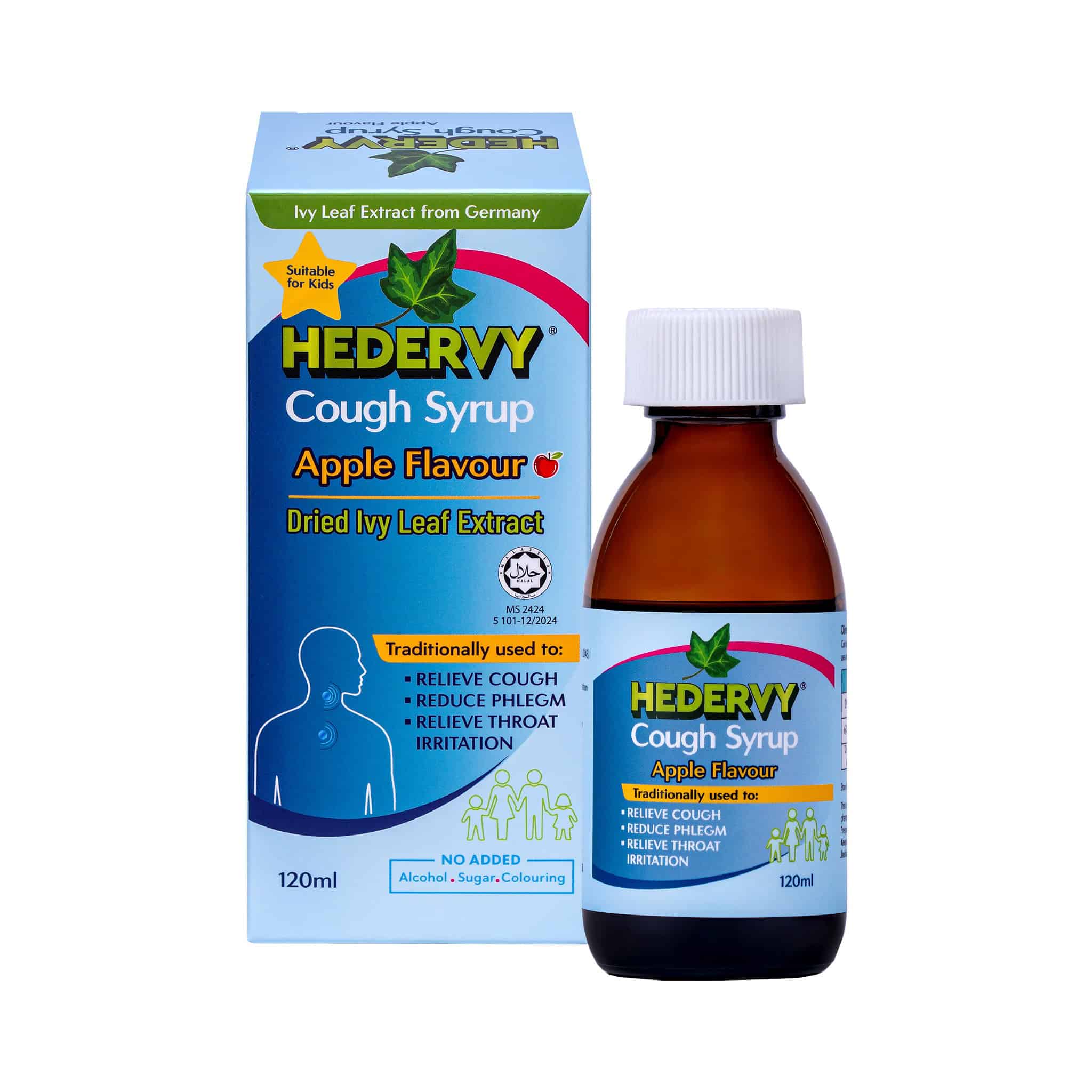
See the range at hedervy.com, or use the pharmacy locator to find a stockist near you.
References
The numbered sources below correspond to the superscript numbers in the article. Every pharmacological claim is cited to a primary source.
- NHS. Chlorphenamine: a drowsy (sedating) antihistamine. (Chlorphenamine is classified as a drowsy/sedating antihistamine; do not drive a car or ride a bike if it makes you sleepy, gives blurred vision, or makes you feel dizzy or unable to concentrate.) nhs.uk/medicines/chlorphenamine ↩
- NHS. Diphenhydramine: a drowsy (sedating) antihistamine. (Diphenhydramine is classified as a drowsy/sedating antihistamine; do not drive, ride a bike, or use tools or machinery if feeling drowsy.) https://www.nhs.uk/medicines/diphenhydramine/ ↩
- NHS. Promethazine hydrochloride. (Promethazine is classified as a drowsy/sedating antihistamine.) https://www.nhs.uk/medicines/promethazine/ ↩
- U.S. FDA-approved drug label (DailyMed, National Library of Medicine). Brompheniramine maleate, pseudoephedrine hydrochloride and dextromethorphan hydrobromide syrup. (Sedation is listed among the most frequent adverse reactions to the brompheniramine-containing formula; label warns: “Patients should be warned about engaging in activities requiring mental alertness, such as driving a car or operating dangerous machinery.”) https://dailymed.nlm.nih.gov/dailymed/drugInfo.cfm?setid=e241d83e-996c-494d-b3fe-97f1ef4809ed ↩
- HealthHub Singapore (Ministry of Health). Codeine. (This medication may cause drowsiness or dizziness, which may impair physical or mental abilities; if affected, do not drive, operate machinery, or perform tasks requiring mental alertness.) https://www.healthhub.sg/a-z/medications/codeine ↩
- European Medicines Agency (Committee on Herbal Medicinal Products). European Union herbal monograph on Hedera helix L., folium. (Reported side effects are limited to digestive upset — nausea, vomiting, diarrhoea — and allergic reactions such as hives, rash, and difficulty breathing; no sedation or CNS effects listed.) https://www.ema.europa.eu/en/medicines/herbal/hederae-helicis-folium ↩
- DailyMed (U.S. National Library of Medicine), FDA-approved guaifenesin drug label. (Purpose: “Expectorant — helps loosen phlegm (mucus) and thin bronchial secretions to rid the bronchial passageways of bothersome mucus and make coughs more productive.” Drowsiness is not listed among the label’s warnings or side effects.) https://www.dailymed.nlm.nih.gov/dailymed/drugInfo.cfm?setid=0a0aa190-8dc7-f9cc-e063-6394a90a6078 ↩
- Health Sciences Authority (HSA) Singapore. HSA Seizes 2,000 Litres of Illegal Codeine Cough Syrup Worth S$1.25 Million in Joint-Agency Crackdown. (Codeine cough syrups are classified as pharmacy-only medicines in Singapore and can only be supplied by a licensed pharmacist or licensed medical practitioner.) https://www.hsa.gov.sg/announcements/hsa-seizes-2-000-litres-of-illegal-codeine-cough-syrup-worth-1-25-million-in-joint-agency-crackdown/ ↩
Last updated 2026-09-28. This article is for general information only and is not a substitute for medical advice. Ask a pharmacist or doctor if you’re unsure which cough syrup suits you.